
Caesarean Birth
Safe & Supported Birth Options
Cesarean Delivery (C-Section): What Expecting Mothers Should Know
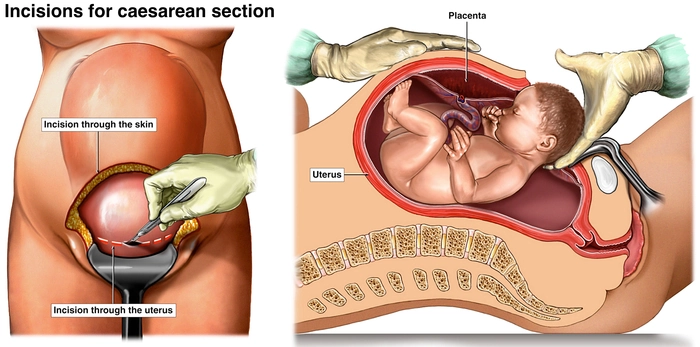
A Cesarean delivery (C-section) is a safe and commonly performed surgical method of childbirth in which the baby is delivered through carefully made incisions in the mother’s abdomen and uterus. It is recommended when a vaginal delivery may pose risks to the mother or baby.
In some cases, a C-section is planned in advance due to medical reasons such as pregnancy complications, baby’s position, multiple pregnancies, or a previous C-section where a vaginal birth after cesarean (VBAC) is not advised. In other situations, the decision for a first-time C-section may arise during labor if unexpected concerns develop and immediate delivery is the safest option.
If you are pregnant, understanding why a C-section may be needed, how the procedure is performed, and what recovery looks like can help reduce anxiety and allow you to feel more confident and prepared. With modern surgical techniques and expert obstetric care, C-sections are highly safe and focused on ensuring the best possible outcome for both mother and baby.
Expert Guidance for a Safe and Healthy Birth
Safe Motherhood | Expert Obstetric Care
A Cesarean section (C-section) is a surgical procedure used to deliver a baby through an incision in the mother’s abdomen and uterus. While many women plan for a vaginal birth, there are situations where a C-section is the safest option for the mother, the baby, or both.
Your obstetrician may recommend a C-section to ensure a smooth, safe delivery when complications arise or when risks outweigh the benefits of vaginal birth.
Like all major surgeries, a C-section carries some risks. Your doctor carefully weighs these against the benefits before recommending surgery.
Risks to the Baby
Breathing difficulties, especially after a planned C-section (transient tachypnea)
Minor surgical injury, such as small skin nicks (rare)
Risks to the Mother
Infection of the uterus or surgical wound
Heavy bleeding during or after delivery
Reactions to anesthesia
Blood clots in the legs or lungs
Injury to nearby organs such as the bladder or bowel (rare)
Increased risks in future pregnancies, including placenta previa, placenta accreta, or uterine rupture
Before the Procedure
Shower with antiseptic soap as advised
Avoid shaving the pubic area before surgery
At the hospital, an IV line and urinary catheter will be placed
Most C-sections are done under spinal or epidural anesthesia, allowing you to stay awake and meet your baby immediately
During the Procedure
A small incision is made in the abdomen and uterus
The baby is delivered safely, followed by the placenta
The incision is carefully closed using sutures
During recovery, it’s normal to feel tired and sore. To heal well:
Rest as much as possible
Avoid lifting heavy objects for a few weeks
Take prescribed pain medications as advised
Avoid sexual intercourse for six weeks
Delay driving until you can move comfortably without pain medication
Your doctor may advise a C-section if:
Labor is not progressing
When the cervix does not open adequately despite strong and prolonged contractions, a C-section helps avoid stress to both mother and baby.Your baby shows signs of distress
Changes in the baby’s heart rate may indicate reduced oxygen supply, making immediate delivery necessary.Baby’s position is not ideal
Babies positioned feet-first (breech), sideways, or shoulder-first (transverse) are often safest delivered via C-section.You are carrying multiple babies
Twins, triplets, or higher-order pregnancies may require a C-section, especially if the first baby is not head-down.Placental complications are present
Conditions like placenta previa, where the placenta covers the cervix, make vaginal delivery unsafe.Umbilical cord prolapse occurs
If the umbilical cord slips ahead of the baby, a C-section is often required to prevent oxygen deprivation.You have certain medical conditions
Serious heart, brain, or systemic conditions—or an active genital herpes infection—may make C-section the safer choice.Mechanical obstruction exists
Large fibroids, pelvic abnormalities, or conditions like severe hydrocephalus (large baby’s head) may block the birth canal.You’ve had a previous C-section
While vaginal birth after cesarean (VBAC) is possible for some women, others may need a repeat C-section depending on medical factors.
Some women request a planned C-section for personal or logistical reasons. However, if you plan to have multiple children, it’s important to discuss long-term risks with your obstetrician before making this decision.
If your C-section is planned:
You may be advised to meet an anesthesiologist to review medical history
Blood tests may be done to assess hemoglobin levels and blood type
Discuss all concerns and possible scenarios with your obstetrician well before your due date
Arrange post-delivery support at home to help with recovery
Even if you’re planning a vaginal birth, it’s wise to be mentally prepared for the possibility of a C-section in case of an emergency.
Hospital stay usually lasts 2–4 days
Pain relief will be provided with breastfeeding-safe medications
Early movement and hydration help prevent complications
Breastfeeding can begin as soon as you’re comfortable
Your incision will be monitored closely for healing
Seek medical help if you notice:
Redness, swelling, or discharge from the incision
Fever or chills
Heavy bleeding
Increasing pain
Emotional distress, sadness, or lack of bonding with your baby
Persistent low mood, exhaustion, or loss of interest may indicate postpartum depression, which is treatable with timely care.
What We Offer
Complete Women’s Healthcare Services
A full spectrum of gynaecologic and maternity services delivered with clinical precision and personalized attention.
Maternity Care
Comprehensive antenatal, delivery, and postnatal care focused on the health of both mother and baby.
Womanhood Care
Personalized gynaecologic care supporting hormonal, menstrual, and reproductive health at every life stage.
Invasive Surgeries
Advanced surgical procedures designed for precision, safety, and faster recovery.
Dedicated to Providing Quality Healthcare for All, Every Day
With the support of an experienced Dr. Sakshi Goel, many women with high-risk pregnancies go on to have safe and healthy deliveries.