
Evaluation
Male & Female Fertility Assessment
The Fertility Evaluation
A standard fertility evaluation is a comprehensive yet straightforward process designed to understand the reproductive health of both partners. It begins with a physical examination and a review of medical and sexual history for both the woman and the man, helping your doctor identify possible factors affecting conception.
For men, fertility testing typically includes a semen analysis. This test evaluates sperm count, movement (motility), and shape (morphology). Specialists closely assess how many sperm are actively moving and whether their movement is strong and purposeful, as sluggish or irregular movement can impact the ability to fertilize an egg.
In many cases, a single clear cause for sperm abnormalities may not be identified. However, advances in reproductive medicine now show that very low sperm count or absence of sperm can sometimes be linked to genetic factors, including changes in the Y chromosome.
The goal of fertility evaluation is not just diagnosis, but direction—guiding you toward the most effective, personalized treatment options. Early assessment can save time, reduce stress, and significantly improve your chances of achieving a healthy pregnancy.
If you’re planning a pregnancy or facing difficulties conceiving, a timely fertility evaluation is the first step toward clarity, confidence, and care.
Fertility Evaluation & Diagnostic Care
Fertility Testing: Clear, Compassionate Answers to Help You Move Forward
The first step is to confirm whether ovulation is happening regularly. This can be assessed through:
- Blood tests that measure hormone levels
- Ultrasound scans of the ovaries
- At-home ovulation test kits
An irregular menstrual cycle may suggest an ovulation issue. However, even women with regular periods can sometimes have ovulation disorders, which is why proper testing is important.
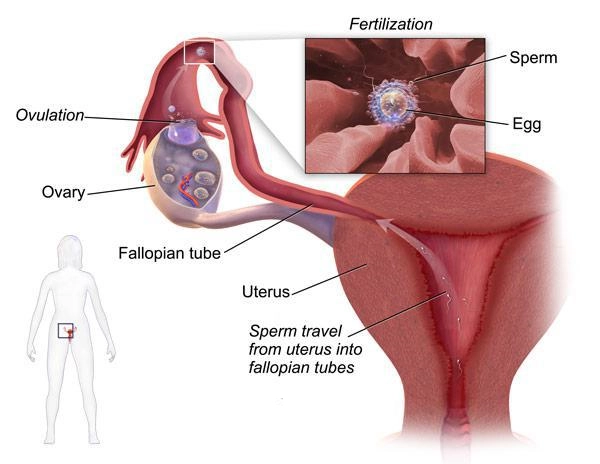
If ovulation is normal, the next step is usually a hysterosalpingogram (HSG)—a specialized X-ray test of the uterus and fallopian tubes. During this test:
- A contrast dye is gently placed into the uterus
- X-ray images show whether the fallopian tubes are open or blocked
If the tubes are open, the dye flows freely. If blocked, the dye stops at the point of obstruction. A newer, FDA-approved option uses foam with ultrasound (HyFoSy) to assess tubal patency without radiation.
Ultrasound plays a key role in examining the reproductive organs. In some cases, more detailed tests are recommended:
- Hysterosonography (Saline Ultrasound): Saline is introduced into the uterus during an ultrasound to better detect abnormalities
- SonoHSG: Uses saline and air bubbles to assess both the uterine cavity and fallopian tubes
These tests can identify conditions such as fibroids, polyps, or uterine shape abnormalities that may interfere with pregnancy.
In certain situations, doctors may recommend laparoscopy, a minimally invasive surgical procedure that allows direct visualization of the uterus, ovaries, fallopian tubes, and abdominal cavity. A major advantage is that conditions like endometriosis can be diagnosed and treated at the same time.
Ovarian reserve testing helps estimate the number and quality of remaining eggs. This is done through:
- Hormone blood tests, often on day 3 of the menstrual cycle
- Ultrasound assessment of the ovaries
Age alone does not determine fertility. Some women in their mid-30s have a healthy egg reserve, while others may experience early decline. Abnormal results do not guarantee infertility—but they do signal the need for timely, targeted treatment.
In rare cases, fertility challenges may be related to how sperm and eggs interact. Tests can detect anti-sperm antibodies, which occur when the immune system mistakenly attacks sperm in either partner.
Fertility testing is not about labels—it’s about answers. With accurate diagnosis, many causes of infertility can be treated effectively. If you’re trying to conceive and have concerns, early evaluation can make all the difference.