
Infertility
Your Parenthood Journey Begins Here
Infertility Overview & Fertility Care
Difficulty conceiving is common and affects 10–15% of couples
Infertility is defined as not getting pregnant after 12 months of regular, unprotected intercourse
Infertility may be related to the female partner, male partner, or both
With early diagnosis and advanced fertility treatment, many couples successfully conceive
Struggling to Conceive? You’re Not Alone
Understanding Infertility and Treatment Options
- Inability to conceive despite regular unprotected intercourse
- Irregular or absent menstrual cycles in women
- Very painful periods or pelvic pain
- Hormonal symptoms in men such as changes in hair growth or sexual function
- In many cases, there may be no obvious symptoms
Women should consult a doctor if they:
- Are 35 years or older and trying for over 6 months
- Are over 40 years of age
- Have irregular, absent, or very painful periods
- Have endometriosis, pelvic inflammatory disease, or fertility disorders
- Have had multiple miscarriages
- Have received cancer treatment
Men should consult a doctor if they have:
- Low sperm count or sperm abnormalities
- Testicular, prostate, or sexual health problems
- History of cancer treatment
- Small testicles or scrotal swelling
- Family history of infertility
- Abnormal sperm production or function
- Varicocele (enlarged veins in the testes)
- Hormonal or genetic conditions
- Sexual dysfunction or sperm delivery problems
- Exposure to heat, radiation, chemicals, alcohol, smoking, or drugs
- Cancer and cancer treatments such as chemotherapy or radiation
- Ovulation disorders (PCOS, thyroid imbalance, hormonal issues)
- Uterine or cervical abnormalities (fibroids, polyps, uterine shape issues)
- Fallopian tube blockage or damage
- Endometriosis
- Early menopause (primary ovarian insufficiency)
- Pelvic adhesions or scar tissue
- Cancer or cancer treatments
- Increasing age (especially after 35 for women, 40 for men)
- Smoking or tobacco use
- Alcohol consumption
- Being overweight or underweight
- Poor diet and inactive lifestyle
- Excessive or inadequate exercise
- Chronic medical conditions
For Couples:
- Have regular intercourse around ovulation
- Maintain a healthy lifestyle and balanced diet
- Avoid smoking, drugs, and excessive alcohol
- Avoid heat exposure (hot tubs, saunas)
- Limit medications that affect sperm quality
- Exercise moderately
- Quit smoking and avoid alcohol or recreational drugs
- Limit caffeine intake
- Maintain a healthy weight
- Exercise moderately
- Avoid extreme dieting
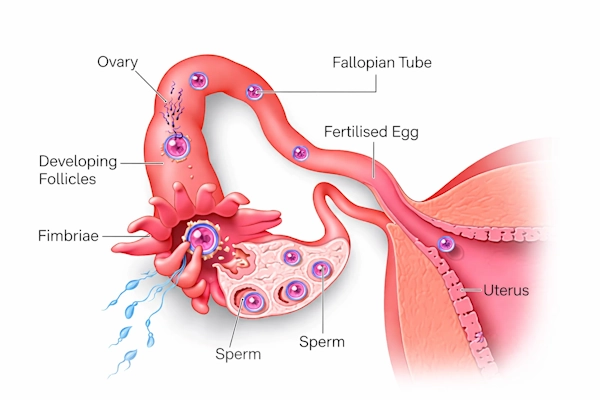
Female Reproductive System
Male Reproductive System
Factors
What We Offer
Complete Women’s Healthcare Services
A full spectrum of gynaecologic and maternity services delivered with clinical precision and personalized attention.
Maternity Care
Comprehensive antenatal, delivery, and postnatal care focused on the health of both mother and baby.
Womanhood Care
Personalized gynaecologic care supporting hormonal, menstrual, and reproductive health at every life stage.
Invasive Surgeries
Advanced surgical procedures designed for precision, safety, and faster recovery.