
Hysteroscopy
Minimally Invasive Diagnostic & Treatment Care
Hysteroscopy – A Simple Test to Look Inside the Uterus
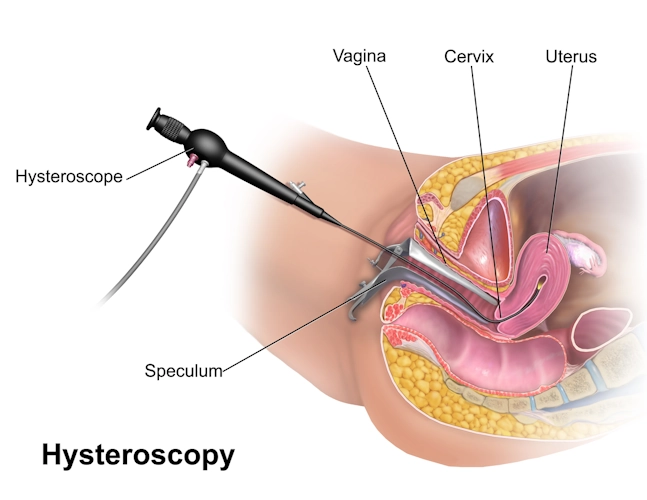
A hysteroscopy is a safe, minimally invasive procedure that allows your doctor to clearly examine the inside of your uterus (womb). It is performed using a thin, lighted instrument called a hysteroscope, which has a tiny camera at its tip. The camera sends real-time images to a screen, helping your doctor accurately identify the cause of symptoms such as abnormal bleeding, fertility concerns, or uterine conditions.
The hysteroscope is gently passed through the vagina and cervix into the uterus, so no incisions or stitches are required. This means less discomfort, quicker recovery, and you can usually return to your normal routine the same day.
If you’re experiencing ongoing gynaecological symptoms, a hysteroscopy can provide clear answers and guide the right treatment—quickly and safely.
Diagnostic & Minimally Invasive Gynaecologic Care
Hysteroscopy: When It’s Needed, What to Expect & Recovery
A hysteroscopy is a simple, minimally invasive procedure used to examine the inside of the uterus (womb). Your gynaecologist may recommend it to:
Investigate symptoms,. such as:
- Heavy or irregular periods
- Unusual vaginal bleeding or bleeding after menopause
- Pelvic pain
- Recurrent miscarriages
- Difficulty getting pregnant
Diagnose uterine conditions, including:
- Fibroids
- Uterine polyps (Both are usually non-cancerous growths)
Treat certain problems, such as:
- Removal of fibroids or polyps
- Removal of a displaced intrauterine device (IUD)
- Treatment of intrauterine adhesions (scar tissue affecting periods or fertility)
Today, hysteroscopy has largely replaced older procedures like dilatation and curettage (D&C) because it is more accurate and allows direct treatment.
- Usually done as an outpatient or day-care procedure—no overnight stay needed
- May be performed without anesthesia, with local anesthesia, or under general anesthesia0, depending on the purpose and your comfort
- The procedure typically lasts 5–10 minutes for diagnosis and up to 30 minutes if treatment is performed
Your doctor will guide you on the best option based on your condition and preferences.
Experiences vary. Many women feel no pain or mild discomfort, while others may feel more discomfort. If you feel uncomfortable at any time, inform your doctor—the procedure can be paused or stopped. Pain relief options can be discussed beforehand for reassurance.
Most women return to normal activities the next day (sometimes the same day).
During recovery:
- You can eat and drink normally
- Mild cramping and light spotting for a few days is common
- Avoid sexual intercourse for about one week or until bleeding stops, to reduce infection risk
Your doctor will explain the results before you leave.
Hysteroscopy is very safe, and complications are uncommon. Rare risks may include:
- Minor injury to the uterus or cervix
- Temporary bleeding
- Infection (usually treated easily with antibiotics)
- Feeling faint (especially without anesthesia)
Your doctor will recommend hysteroscopy only when the benefits clearly outweigh the risks.
Other tests may include:
- Pelvic ultrasound
- Endometrial biopsy
These tests may help with diagnosis but do not provide the same accuracy or treatment options as hysteroscopy.
If you’re experiencing abnormal bleeding, fertility concerns, or uterine symptoms, a hysteroscopy can provide clear answers and effective treatment in a single procedure.