
Myomectomy
Advanced Gynaecologic Surgery
Myomectomy – Safe & Fertility-Preserving Fibroid Removal
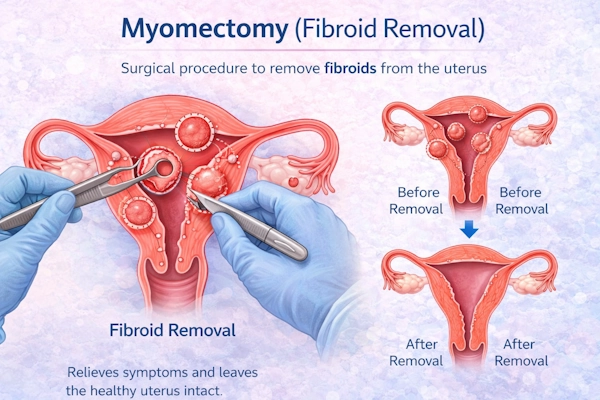
Myomectomy is a specialized surgical procedure designed to remove uterine fibroids (also known as leiomyomas)—common, non-cancerous growths that develop within the uterus. Fibroids most often appear during a woman’s reproductive years, but they can occur at any stage of life and may cause symptoms such as heavy menstrual bleeding, pelvic pain, pressure, or fertility challenges.
The primary goal of a myomectomy is to carefully remove only the fibroids while preserving and reconstructing the uterus. This makes myomectomy an ideal treatment option for women who wish to maintain their fertility or keep their uterus intact. Unlike hysterectomy, which involves removal of the entire uterus, myomectomy focuses on targeted fibroid removal with uterine preservation.
Most women experience significant relief after myomectomy, including lighter periods, reduced pelvic discomfort, and an overall improvement in quality of life. With modern surgical techniques and expert gynaecologic care, myomectomy is a safe and effective solution for managing symptomatic uterine fibroids.
👉 If fibroids are affecting your comfort, cycles, or future pregnancy plans, consult a gynaecologist to see if myomectomy is the right option for you.
Uterine Fibroid Treatment
Myomectomy – A Uterus-Preserving Surgical Option for Fibroids
Your gynaecologist may recommend a myomectomy if uterine fibroids are causing symptoms that affect your daily life, such as heavy menstrual bleeding, pelvic pain, pressure, or fertility concerns.
A myomectomy is often preferred over hysterectomy if:
- You wish to plan a future pregnancy
- Fibroids may be interfering with fertility
- You want to preserve your uterus
You prefer a uterus-saving treatment for fibroids This procedure removes fibroids while keeping the uterus intact, making it an effective and fertility-friendly option for many women.
Myomectomy is generally safe and has a low complication rate when performed by an experienced surgeon. However, like all surgeries, it carries some risks:
Excessive Blood Loss
Many women with fibroids already have anemia due to heavy periods, which increases the risk of blood loss during surgery. Surgeons take special precautions—such as medications to reduce bleeding or temporary control of uterine blood flow—but a blood transfusion may still be required in rare cases.
Scar Tissue (Adhesions)
Incisions in the uterus can lead to scar tissue formation. Minimally invasive approaches like laparoscopic myomectomy usually result in fewer adhesions compared to open surgery.
Pregnancy or Delivery Complications
If you become pregnant after a myomectomy, there may be a slightly higher risk during labor, especially if deep uterine incisions were required. In such cases, a planned cesarean delivery may be advised to ensure safety.
Rare Need for Hysterectomy
In very rare situations, uncontrollable bleeding or unexpected findings may require removal of the uterus during surgery.
Rare Risk of Undetected Cancer Spread
Occasionally, a cancerous tumor may resemble a fibroid. Certain techniques used to remove fibroids in small pieces may increase the risk of cancer spread. Your doctor will discuss safe surgical options and techniques best suited for you.
Your doctor may recommend steps before surgery to improve safety and outcomes:
Correcting Anemia
- Iron supplements and vitamins to improve hemoglobin levels
- Hormonal therapy to reduce heavy bleeding before surgery
Shrinking Fibroids Before Surgery
Certain hormonal medications can temporarily shrink fibroids and the uterus, allowing for a minimally invasive approach and faster recovery. These treatments are carefully selected based on individual needs and medical suitability.
Your doctor will always balance benefits, side effects, and costs before recommending any pre-surgical therapy.
Food and Medications
- You will need to fast for several hours before surgery
- Inform your doctor about all medications, supplements, and vitamins you take
- Follow specific instructions about continuing or stopping medicines
Anesthesia Options
Depending on the procedure, anesthesia may include:
- General anesthesia (you are fully asleep)
- Monitored anesthesia care (MAC) for less invasive procedures
- Occasionally spinal or local anesthesia
Your doctor will explain what is safest and most appropriate for you.
- Abdominal myomectomy: Usually 1–2 days in hospital
- Laparoscopic/robotic myomectomy: Often same-day discharge or overnight stay
- Hysteroscopic myomectomy: Typically outpatient .
You’ll need someone to accompany you on the day of surgery and assist with transportation
Abdominal Myomectomy
Performed through an open incision in the lower abdomen, usually along the bikini line. Recommended for large or multiple fibroids.
Laparoscopic or Robotic Myomectomy
Minimally invasive procedures using small incisions. Benefits include:
- Less blood loss
- Faster recovery
- Shorter hospital stay
- Lower risk of complications
Hysteroscopic Myomectomy
Used for fibroids inside the uterus. The surgeon removes fibroids through the vagina and cervix without external incisions.
After discharge, you’ll receive:
- Pain medications
- Care instructions
- Temporary activity and diet restrictions
Light vaginal spotting is normal and may last a few days to several weeks, depending on the procedure.
Symptom Relief
Most women experience significant improvement in heavy bleeding, pelvic pain, and pressure.
Fertility Outcomes
Many women successfully conceive after myomectomy. A waiting period of 3–6 months is usually advised before trying to get pregnant.
Fibroid Recurrence
New fibroids may develop over time, especially if multiple fibroids were present initially. Women who become pregnant after surgery often have a lower risk of recurrence.
If fibroids are affecting your health, comfort, or fertility, myomectomy offers an effective, uterus-preserving solution.