
Antenatal Care
Compassionate Pregnancy Support
Antenatal Care for a Safe & Healthy Pregnancy
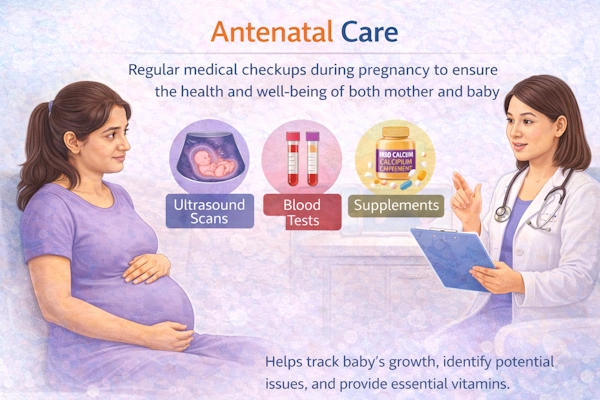
Antenatal care is essential for safeguarding the health of both mother and baby throughout pregnancy. Regular check-ups provide expert medical guidance, early detection of complications, and reassurance at every stage.
Through antenatal care, expectant mothers receive nutrition advice, micronutrient supplementation, blood pressure monitoring to prevent pre-eclampsia, and essential immunizations such as tetanus. Screening services, including HIV testing and preventive treatment, help reduce risks to the baby.
Antenatal visits also offer emotional support and education on healthy pregnancy practices and warning signs—ensuring timely care when needed. With consistent antenatal care, mothers can feel confident, supported, and well-prepared for childbirth.
Pregnancy Care & Maternal Health
Antenatal Care Coverage: What Every Expecting Mother Should Know
Antenatal care (ANC) is one of the most important steps to ensure a healthy pregnancy, safe delivery, and a strong start for your baby. It refers to the routine medical check-ups a woman receives during pregnancy from trained healthcare professionals such as a doctor, nurse, or midwife.
Antenatal care coverage (at least one visit) means the percentage of women (aged 15–49) who had a live birth and received at least one pregnancy check-up from a skilled health professional during their pregnancy. These trained professionals are qualified to monitor normal pregnancies, identify risks early, and manage or refer complications when needed.
Traditional or untrained birth attendants are not included in this category.
Antenatal care coverage (at least four visits) refers to the percentage of women who received four or more antenatal check-ups during pregnancy. These visits may be with any healthcare provider. According to global health standards, attending multiple visits greatly improves pregnancy outcomes.
Each antenatal visit is an opportunity to protect both mother and baby. The World Health Organization (WHO) recommends a minimum of four antenatal visits, as this increases the chances of detecting and preventing complications early.
During these visits, essential health checks usually include:
Blood pressure monitoring
Urine tests to detect infections or protein leakage
Blood tests to screen for anaemia and infections such as syphilis
Weight and height assessment (when required)
These screenings help ensure proper fetal growth, reduce pregnancy risks, and promote a safer delivery.
While attending antenatal visits is crucial, simply visiting does not always guarantee that every recommended test or treatment is provided. However, having four or more visits significantly increases the likelihood of receiving complete and effective pregnancy care.
It’s also important to note that:
“At least one visit” specifically involves skilled health professionals.
“Four or more visits” may include care from any provider, as some surveys do not record provider details for each visit.
The definition of “skilled health personnel” may vary slightly between countries due to differences in training standards.
What We Offer
Complete Women’s Healthcare Services
A full spectrum of gynaecologic and maternity services delivered with clinical precision and personalized attention.
Maternity Care
Comprehensive antenatal, delivery, and postnatal care focused on the health of both mother and baby.
Womanhood Care
Personalized gynaecologic care supporting hormonal, menstrual, and reproductive health at every life stage.
Invasive Surgeries
Advanced surgical procedures designed for precision, safety, and faster recovery.
Dedicated to Providing Quality Healthcare for All, Every Day
With the support of an experienced Dr. Sakshi Goel, many women with high-risk pregnancies go on to have safe and healthy deliveries.